
The Friendship Built Through Words
The Surgeon of CrowthorneThis thread follows how correspondence about dictionary evidence became a friendship that gave William Chester Minor intellectual purpose and James Murray a relationship founded on respect, patience, and shared work.
increasing Bearing strength in each event
 decreasing
Bearing strength in each eventdecreasingA Volunteer’s First Letter
A Stranger at Crowthorne
Contact Through the Dictionary
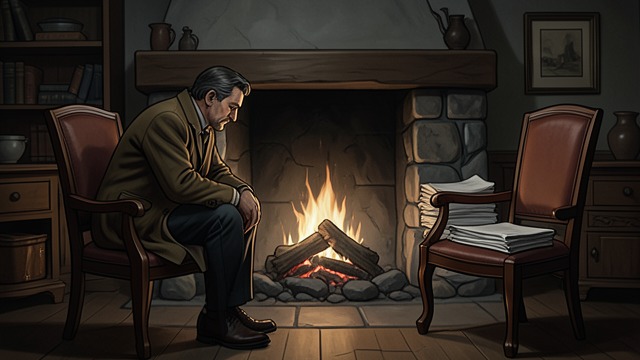
After William Chester Minor encountered James Murray’s appeal for readers, he offered to help build the new dictionary. Murray accepted the volunteer without knowing that he was writing to a patient confined at Broadmoor Asylum. Their first bond was therefore made at a distance, through courteous letters and the shared business of finding apt examples for English words.
For Minor, Murray’s reply meant more than permission to read. After years of isolation and illness, the editor’s instructions offered a way to be useful to a serious intellectual undertaking. The work placed him in contact with an outside world that could value his learning without first reducing him to his crime or diagnosis.
Trust in the Requested Quotations
A Working Confidence
The First Test
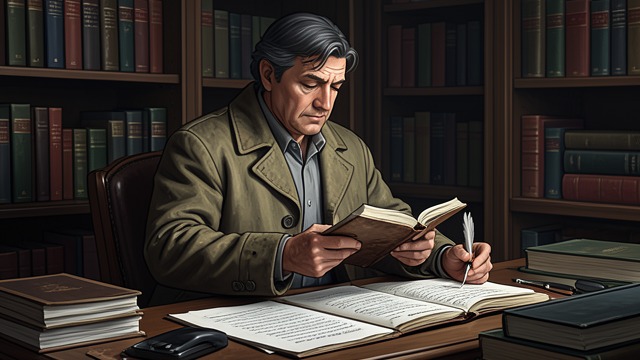
When the Oxford editors asked Minor to look for evidence on the word art, he answered with twenty-seven quotations. The response showed that the quiet correspondent could deliver exactly what the editors needed, and it began a dependable pattern: Murray’s team sent a query, and Minor searched his carefully indexed books for useful evidence.
Their connection remained formal, but trust grew through the repeated exchange. Minor’s contributions helped Murray’s team solve difficult lexical problems, while each successful request confirmed to Minor that his work mattered. The relationship’s emotional force lay in that steady recognition, not in grand declarations: the editor relied on him, and the volunteer could feel himself included in the making of the dictionary.
The Disclosure of the Asylum
The Hidden Circumstance
A Change in Understanding
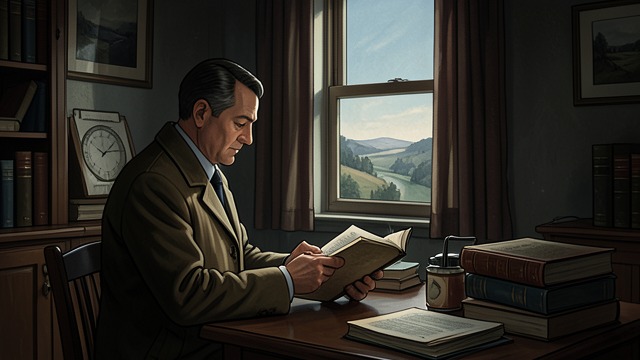
Murray learned from a visiting scholar that his prolific correspondent was not simply a retired doctor but a patient at Broadmoor. The revelation forced him to reinterpret years of letters, though it did not change the quality of Minor’s scholarship. Murray was deeply affected and worried that openly acknowledging what he had learned might embarrass or unsettle his contributor.
He chose not to confront Minor with the disclosure. Instead, he wrote more kindly and respectfully, preserving the terms of their working relationship. That restraint was itself an act of consideration: Murray protected the trust already established and left Minor room to decide what he wished to reveal about his life.
The First Visit and Long Walks
Correspondents Become Companions
Meeting in Person
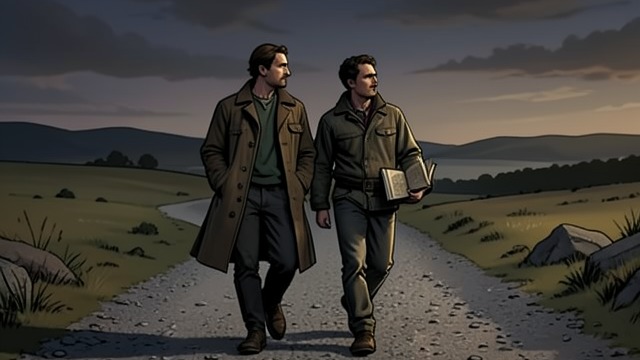
After an American visitor told Murray that Minor knew the truth and would welcome a visit, Murray wrote to arrange one. In January 1891, he went to Broadmoor and spent hours with the man whose work had so often reached his desk. Murray found him cultivated, artistic, and gracious, while also seeing signs of the delusions that shaped life inside the hospital.
The visit began a personal friendship that continued over years of further visits. The two men talked about words, books, and language, and sometimes walked together along the asylum’s Terrace. Their conversations offered Minor companionship beyond correspondence; for Murray, the visits joined gratitude for a vital contributor to sympathy for a friend living under severe restrictions.
A Farewell Across the Atlantic
Separation and Loss
The Last Meeting
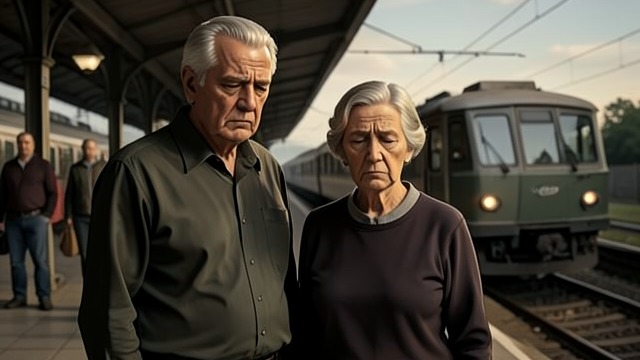
When age and declining health made Minor’s long confinement more painful, Murray supported the effort to return him to the United States. On the day Minor left Broadmoor in April 1910, Murray and his wife came to say goodbye. The farewell was restrained, but it marked the end of the visits that had sustained their friendship in person.
Minor continued to remember Murray and the dictionary after the separation. When Murray died in 1915, the loss removed the friend most closely associated with the intellectual work that had given Minor purpose. Their bond had begun with requests for quotations, but it endured as a friendship built on attentive regard, shared scholarship, and the rare feeling that each understood the other’s work.
Around 1880 or 1881
Spring and summer 1885
Between 1887 and 1890
January 1891 and the following years
April 1910 and July 1915
